Barium is a silvery-white metal that can be found in the environment, where it exists naturally. It occurs combined with other chemicals, such as sulfur, carbon or oxygen. Ii is very light and its density is half that of iron. Barium oxidizes in air, reacts vigorously with water to form the hydroxide, liberating hydrogen. Barium reacts with almost all the non-metals, forming often poisoning compounds.
Barium acetate is the salt of barium(II) and acetic acid
Barium chloride is the inorganic compound with the formula BaCl2. It is one of the most common water-soluble salts of barium.
This material is used as a general-purpose additive for lubricants and greases. Other industrial applications for barium hydroxide include sugar fabrication, manufacturing soaps, fat saponification, fusing of silicates and chemical synthesis of other barium compounds and organic compounds
Benzalkonium Chloride CP 100g is primarily used as a disinfectant and preservative due to its broad-spectrum antimicrobial properties, meaning it can kill a wide range of bacteria, fungi, and viruses; it's commonly used to sterilize surfaces, equipment, and solutions in various laboratory applications, including microbiology and cell culture
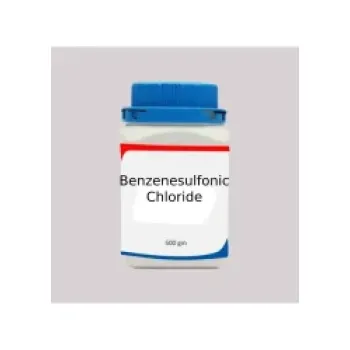
Benzenesulfonyl chloride is prepared by reaction of benzene and chlorosulfonic acid or from the sodium salt of benzenesulfonic acid and PCl5 or POCl3. It reacts with Grignard reagent from N-unsubstituted indoles to form oxindoles or substituted indoles. Benzenesulfonyl chloride is the derivatization reagent for the determination of various amines in waste water and surface water at the sub-ppb level by gas chromatography-mass spectrometry.