Welcome to Science Beauty. Where Science and Beauty Meet.

Search

We are committed to quality, transparency, and sustainability.
Need help? Tel: 010 017 6710

In Stock

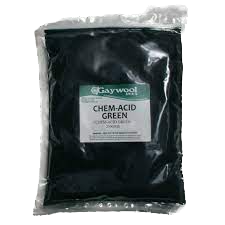
Green Acid Dye 5 Kg


Pack size from 50g


R3999,00

Compare
SKU:TC4363

Green Acid Dye” is typically used as a biological stain to color specific structures within tissue samples under a microscope, particularly targeting proteins in the cytoplasm due to its acidic nature, which attracts positively charged components of the cell; it’s commonly used in histology and pathology research to identify specific tissue components.

Considered an “acid dye” which means it binds to positively charged structures in the cell, like the cytoplasm and collagen fibers.

Primarily used in histological staining procedures to visualize cellular components in tissue samples.
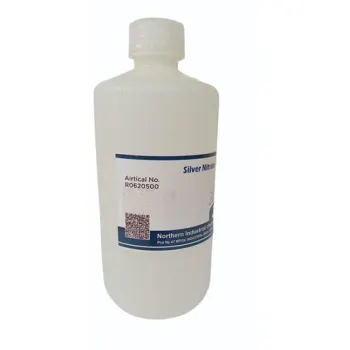
Weight 5 kg
Dimensions 20 × 20 × 30 cm

Bestsellers

Sulphuric Acid 98% AR 2.5L

R495,00
Sulphuric Acid 98% AR 2.5L In a laboratory, sulfuric acid (H2SO4) has many uses, including:
  • Creating other acids Sulfuric acid can be used to create other acids, such as hydrochloric acid and nitric acid. 
  • Creating synthetic materials Sulfuric acid can be used to create synthetic detergents, pigments, dyes, and sulfate salts. 
  • Processing metals Sulfuric acid is widely used in processing metals. 
  • Acting as a catalyst Sulfuric acid can act as a catalyst in reactions, such as the esterification reaction.  In laboratory settings, Sulphuric Acid AR is used in titrations and as a reagent for various chemical analyses. Its high purity ensures accurate and reliable results, which is essential for scientific research. Additionally, it is used in the preparation of samples, pH adjustment, and as a dehydrating agent.
Sulphuric acid is also known as oil of vitriol. It is a colorless, odorless, and viscous liquid that is soluble in water. It is extremely corrosive and destructive to tissue, and can be carcinogenic to humans.  Sulfuric acid should be handled and stored carefully. It is incompatible with many materials, including bases, halides, organic materials, carbides, and nitrates. It reacts violently with cyclopentadiene, cyclopentanone oxime, nitroaryl amines, and powdered metals sulphuric Acid 98% AR 2.5L

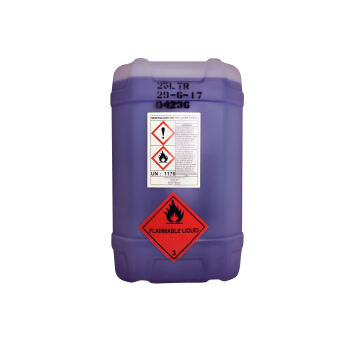
Sulfuric Acid 98% Industrial Grade

Pack Size: 25 Lt CAS No: 7664-93-9 Application Fertilizers Detergents Synthetic resins Batteries Paints  

Calcium Metal Granular AR 100g

R459,00
Descr: Calcium Metal 99,9%  Colour: Silvery-White Pack Size:100g Symbol: Ca Category: Alkali Metal

Streptomycin Sulfate Salt 25g

R627,18
Streptomycin Sulfate Salt 25g is used to study mechanisms of streptomycin resistance and is often used together with penicillin and other agents to inhibit bacterial contamination in cell culture applications

Barium Acetate, Barium Antidote and Barium Chloride

R4898,00
Barium is a silvery-white metal that can be found in the environment, where it exists naturally. It occurs combined with other chemicals, such as sulfur, carbon or oxygen. Ii is very light and its density is half that of iron. Barium oxidizes in air, reacts vigorously with water to form the hydroxide, liberating hydrogen. Barium reacts with almost all the non-metals, forming often poisoning compounds. Barium acetate is the salt of barium(II) and acetic acid Barium chloride is the inorganic compound with the formula BaCl2. It is one of the most common water-soluble salts of barium.

Mercuric Chloride AR 100g

R1495,00
Mercuric Chloride AR (Analytical Reagent grade) 100g is primarily used as a chemical reagent for organic synthesis reactions, acting as a catalyst for specific chemical transformations, including cyclization reactions and addition reactions between aromatic amines and terminal acetylenes; however, due to its high toxicity, its use is carefully controlled and often substituted with safer alternatives when possible.

Sodium Benzoate CP 2.5kg

R363,02
Sodium benzoate inhibits the growth of potentially harmful bacteria, mold, and other microbes in food, thus deterring spoilage. It's particularly effective in acidic foods Therefore, it's commonly used in foods, such as soda, bottled lemon juice, pickles, jelly, salad dressing, soy sauce, and other condiments.
📋 View Quotation 0

Back to Top
Product has been added to your cart

Select at least 2 products
to compare